
 Available in US
Content

Bet Builders Let You Design Your Own Market — but the Maths Still Applies
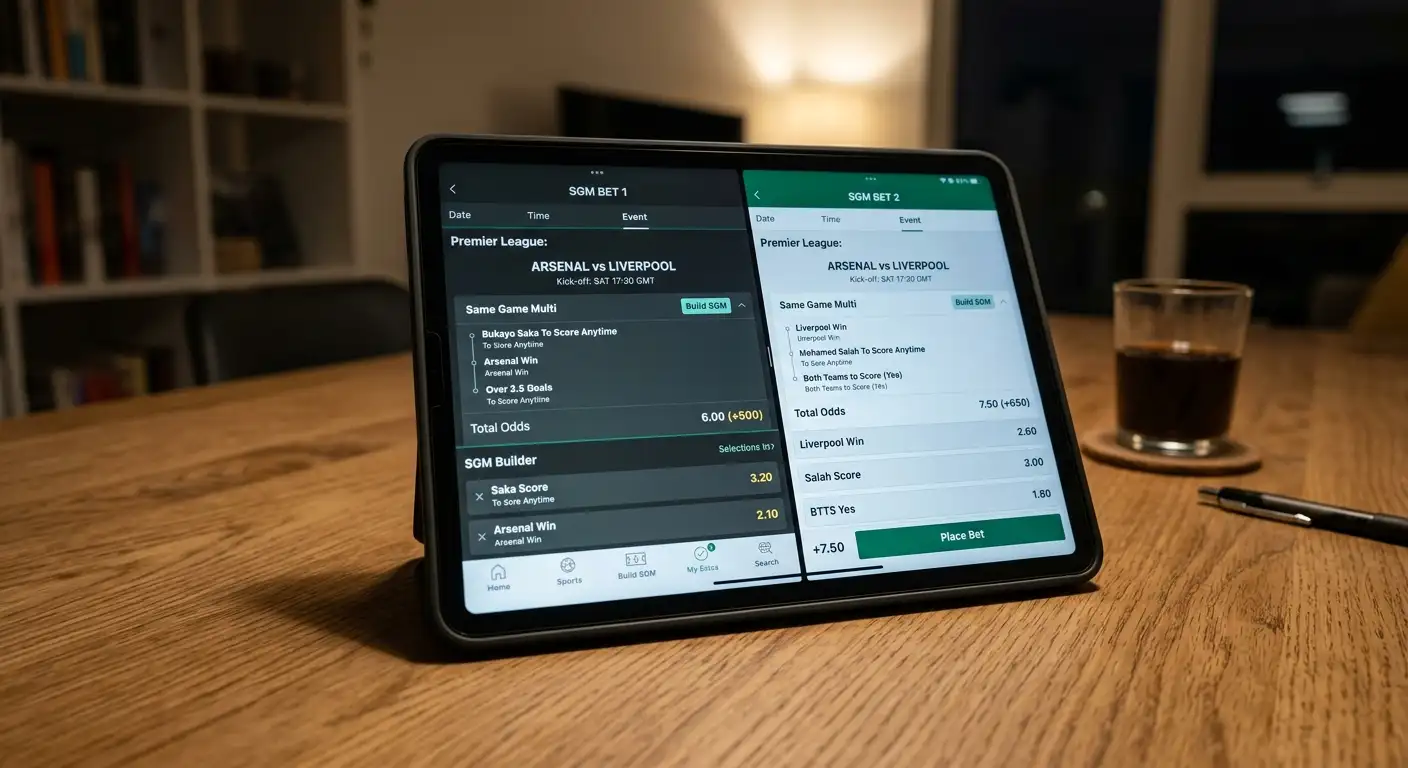
Last season I built what I thought was a clever same-game multi for a Wolves vs Brentford fixture. Over 2.5 goals, both teams to score, and a Brentford player to score first. Each leg looked reasonable on its own. The combined odds came out at 7.50. Then I sat down and priced each leg independently, multiplied the probabilities, and realised the fair combined odds should have been closer to 10.00. The bookmaker was not offering me a generous price — they were clipping me on every junction between those legs. That is the bet builder trap, and it catches almost everyone who uses the product without doing the arithmetic.

Bet builders have become the fastest-growing product in UK football betting. The appeal is obvious: you pick a match, combine selections from different markets within that single game, and get a custom price. Football generates around 1.3 billion pounds in gross gambling yield annually from remote betting in the UK, and an increasing share of that comes from same-game multiples. Operators love them because the margins are higher. Bettors love them because they feel personalised. The question is whether that personalisation costs more than it is worth.
How Bet Builders Price Correlated Selections
Here is the problem nobody talks about in the marketing material. A traditional accumulator multiplies the odds of independent events — different matches, different outcomes. The maths works cleanly because the result of Liverpool vs Chelsea has no bearing on the result of Brighton vs Aston Villa. Bet builders combine selections within the same match, where outcomes are correlated.
If you back over 2.5 goals and both teams to score in the same game, those two outcomes are positively correlated. A match that produces three or more goals is far more likely to feature both teams scoring than a match that finishes 1-0. A naive calculation would multiply the two probabilities as if they were independent — but a sharp bookmaker adjusts for that correlation and gives you worse odds than the naive multiplication would suggest.
The adjustment happens inside a pricing model that the operator does not publish. You see the final combined odds but not the individual margin applied to each leg or the correlation discount. In my experience, the effective margin on a three-leg bet builder runs between 15% and 25%, compared with 5-8% on a pre-match 1X2 market. That is a huge tax on your edge, and it accumulates with every leg you add.
I once compared the same three-leg combination across four different operators for the same fixture. The combined odds ranged from 5.50 to 7.20. Same legs, same match, a 30% price difference. That tells you how much discretion the operator has in setting bet builder margins — and how little standardisation exists.

Combinations That Make Analytical Sense
Not all bet builder combinations are created equal. The key distinction is between positively correlated, negatively correlated, and weakly correlated selections. Understanding which is which determines whether you are building a coherent thesis or just stacking random legs for the sake of bigger odds.
Positively correlated legs reinforce each other. Over 2.5 goals and both teams to score move together — high-scoring games tend to involve both sides finding the net. Backing a team to win and their striker to score anytime is another natural pairing. When you combine positively correlated legs, the bookmaker’s correlation adjustment works against you most aggressively, because they know the real combined probability is higher than the naive multiplication implies.
Negatively correlated legs contradict each other. Backing a team to win to nil and over 3.5 goals is internally tense — a clean sheet with four or more goals requires a dominant scoreline like 4-0 or 5-0, which is rare. These combinations produce eye-catching odds but very low strike rates. I steer clear of them unless the data for a specific fixture is unusually compelling.
The combinations I gravitate towards are weakly correlated pairs where I have an analytical reason for each leg independently. For instance, backing under 2.5 goals and a specific centre-back to be carded in a match where I expect a tight, physical contest. The card market and the goals market have minimal statistical correlation, which means the bookmaker’s adjustment is smaller. Both legs arise from the same match thesis — a scrappy, low-scoring affair — but they are priced almost independently. That is the sweet spot.
The Hidden Margin in Bet Builders
Flutter Entertainment, the parent company of several major UK-facing operators, generated roughly 1.7 billion dollars in sports betting revenue from the UK and Ireland in 2024. Bet builders are a meaningful contributor to that figure precisely because their margins exceed standard markets by a wide margin.
To illustrate: suppose you want to back a Premier League home win. The 1X2 market prices it at 1.80 decimal, implying about 55.6% probability. The bookmaker’s overround means the true implied probability is a touch lower — say 53%. Now build the same outcome into a bet builder alongside “over 0.5 match goals” (virtually certain in most fixtures) and “over 0.5 corners in the first half” (again, near-certain). The bet builder will not price this at 1.80. It will come in lower — perhaps 1.65 or 1.70 — because the operator applies a margin to each leg, including the near-certainties, and layers a correlation discount on top. You are getting worse odds for a functionally identical outcome.

I test this regularly by constructing bet builders where two of the three legs have implied probabilities above 90% and comparing the combined price against the standalone price of the one meaningful leg. The difference is the hidden margin, and it consistently runs between 8% and 15% for that kind of construction.
A Step-by-Step Process for Building a Bet
When I do use bet builders — and I do, selectively — I follow a process that keeps the margin damage manageable.
First, I identify a match thesis. Not “I fancy Arsenal to win” but a specific scenario: “Arsenal will dominate possession, create chances from wide areas, and face a low-block side that will struggle to generate shots.” That thesis should come from data — expected goals, defensive actions in the box, pressing intensity — not from reputation.
Second, I select no more than three legs, each of which follows directly from the thesis. If my thesis is about Arsenal dominance, I might combine an Arsenal win, over 1.5 Arsenal goals, and over 8.5 Arsenal corners. Each leg is analytically connected to the same scenario. I avoid adding a fourth leg for the sake of odds — every additional leg compounds the margin.
Third, I price each leg independently using my own probability estimates and multiply them, adjusting for any obvious positive correlation. If the bookmaker’s combined odds are above my adjusted fair price, the bet has value. If the bookmaker’s price is below, I walk away — no matter how appealing the combined odds look in isolation. This is the step most bettors skip, and it is the step that matters most.

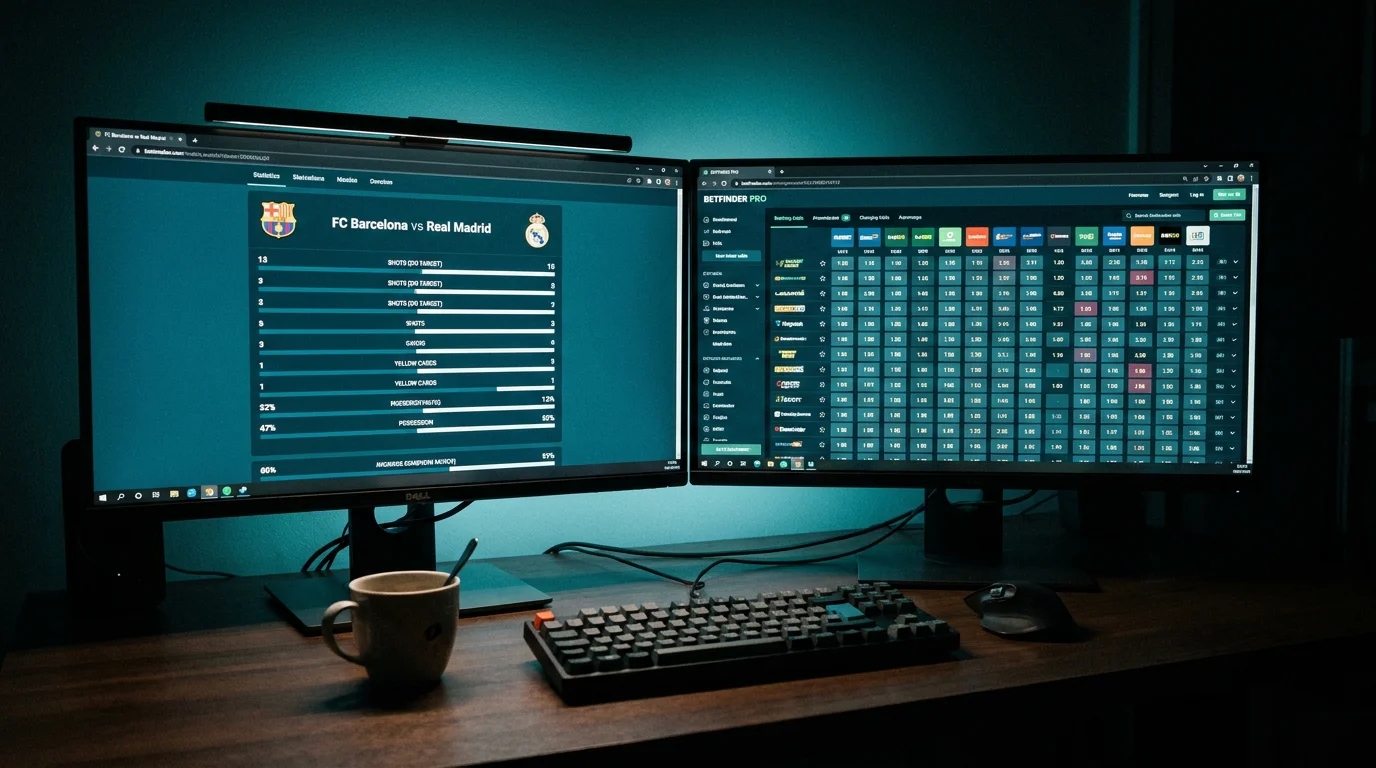
Fourth, I compare the bet builder price across at least three operators. The variance in bet builder pricing is enormous compared to standard markets, and five minutes of comparison shopping can shift your effective odds by 15-20%. If you are serious about bet builders as a long-term approach, this comparison is not optional. For a broader look at how same-game multiples fit alongside football accumulator tips and traditional accas, the accumulator guide covers the full spectrum.
Why are bet builder odds often lower than a traditional accumulator?
Bet builders combine selections within the same match, where outcomes are correlated. The bookmaker adjusts for that correlation and applies a margin to each individual leg, resulting in combined odds that are lower than you would get by naively multiplying the standalone prices. A traditional accumulator uses independent events across different matches, where no correlation adjustment is needed.
Can I cash out a bet builder?
Most major UK operators offer full or partial cash out on bet builders, though the cash-out value is typically less generous than on standard single bets. The operator applies the same margin dynamics to the cash-out calculation, so expect the offered amount to reflect a further discount beyond the live probability of your remaining legs landing.
