
 Available in US
Content

5.8% of UK Adults Already Bet on Football — Here Is How to Start
My first football bet was a disaster. I walked into a betting shop at 18, put five pounds on a four-fold accumulator of teams I recognised, and lost before the Saturday afternoon results had even finished coming in. I had no idea how odds worked, no sense of what I was actually risking, and no plan beyond “those teams sound good”. That was a cheap lesson. Some people’s first encounter with football betting costs them a lot more.
Around 5.8% of the UK adult population bets on football — the highest participation rate of any sport. Nearly half of British adults engage in some form of gambling over any four-week period, though much of that is lottery tickets. Football betting is different: it is regular, it is emotional, and it scales quickly from small stakes to significant sums if you do not set boundaries early. This guide is the one I wish someone had handed me before I placed that first accumulator.
Opening an Account: Age, ID, and Verification
You must be 18 or older to place a bet in the UK. There are no exceptions, no workarounds, and operators take this seriously because the Gambling Commission enforces it with real consequences.
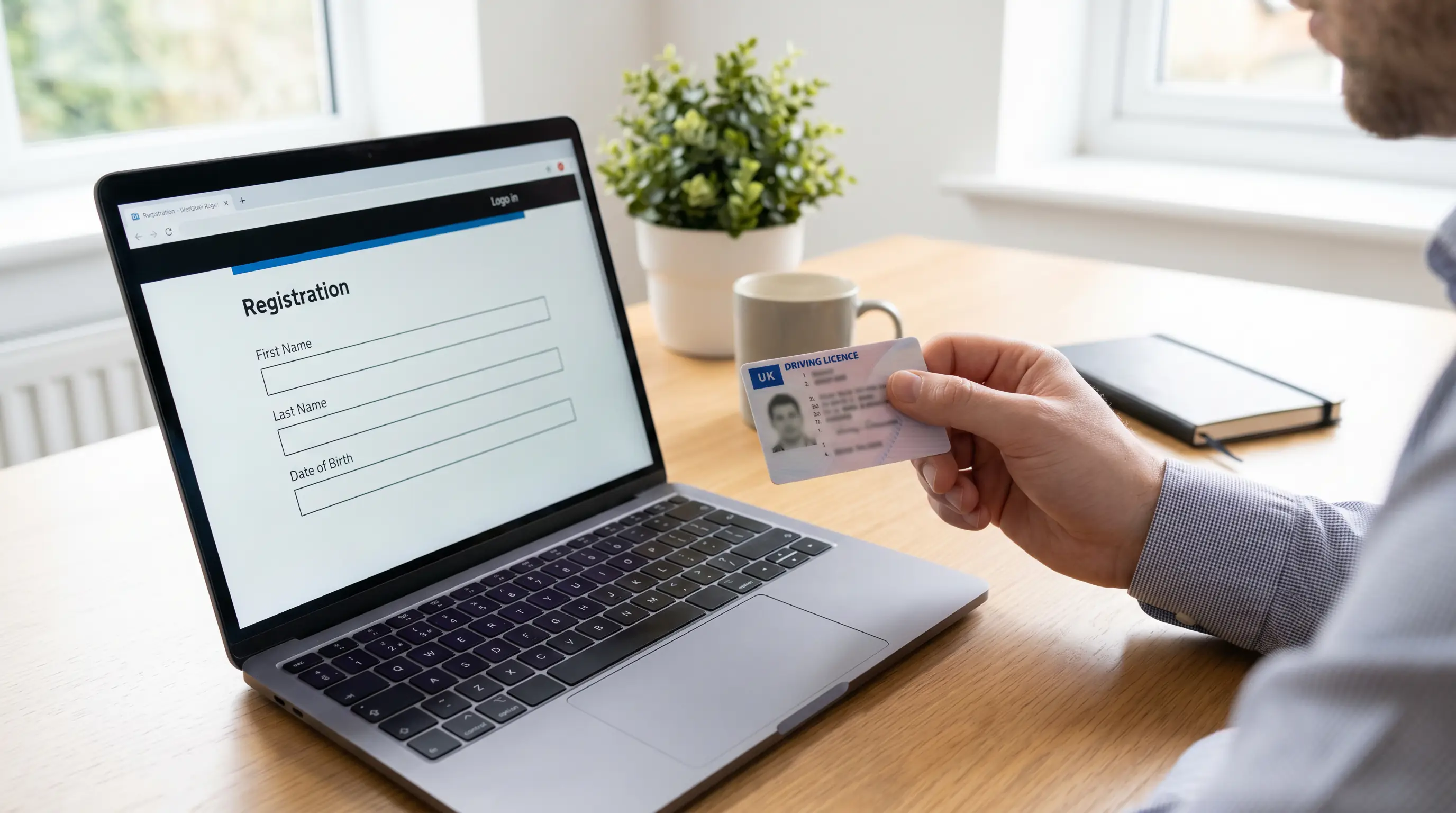
When you open an account with a licensed operator, you will need to provide proof of identity and address. This usually means a passport or driving licence and a recent utility bill or bank statement. The verification process is standard anti-money-laundering procedure, not a barrier designed to put you off. Most operators complete it automatically in minutes using electronic checks — you upload a photo of your ID, the system matches it, and you are verified.
Since February 2025, the threshold for a financial vulnerability check has dropped to 150 pounds in net deposits over a rolling 30-day period. That means if you deposit more than 150 pounds in a month, the operator may run an automated check against public financial data to flag potential affordability concerns. Around 20% of online customers may encounter this check at some point. The vast majority — 97% in the pilot — pass it automatically without any interruption. It is not an affordability cap and it does not limit what you can bet, but it is worth knowing about from day one so it does not catch you off guard.
Your First Football Bets: Which Markets to Try
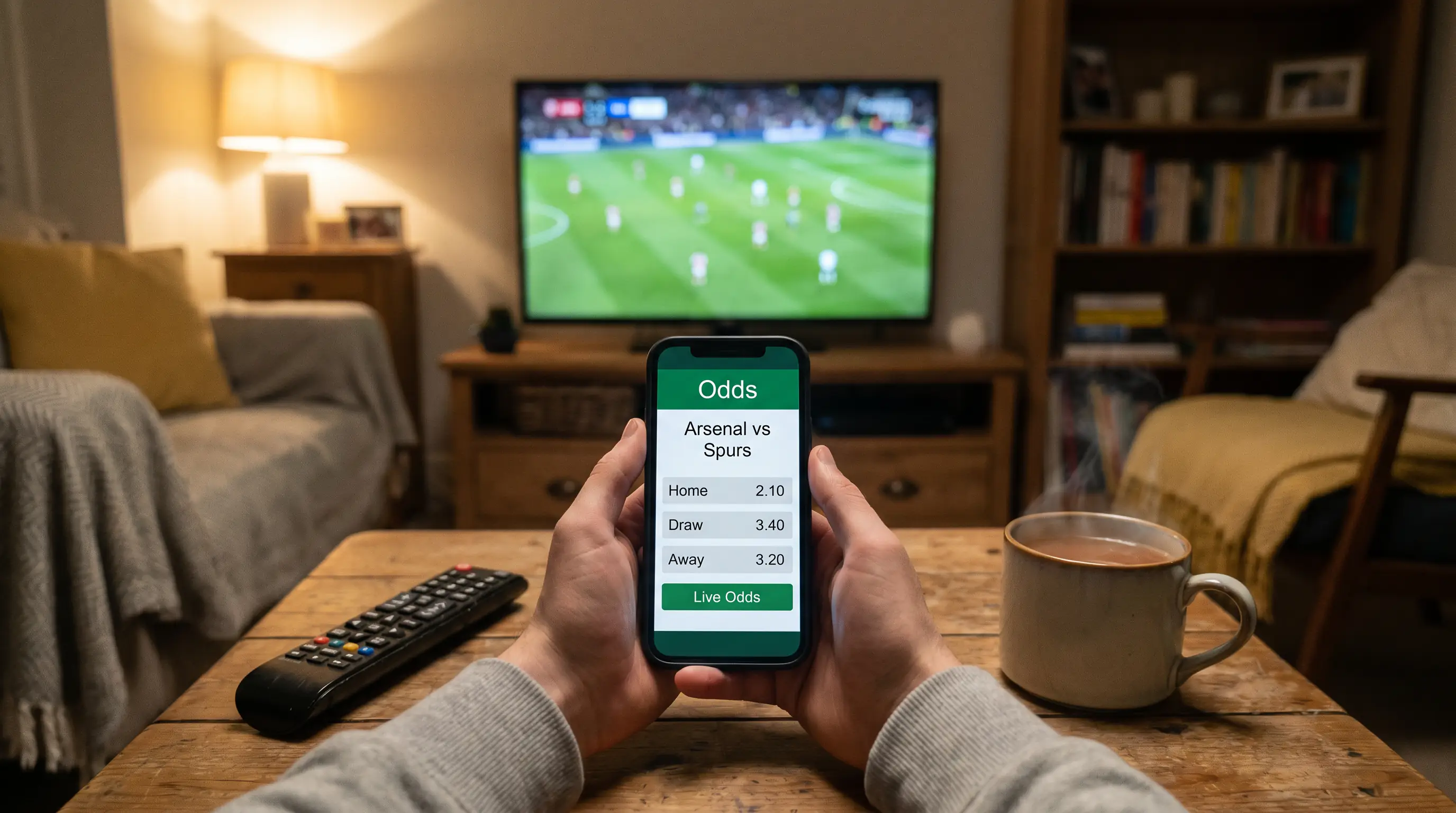
When I mentor new bettors, I always tell them the same thing: start with single bets on markets you understand. The temptation to jump into accumulators, bet builders, and exotic markets is strong — the potential payouts are bigger and the experience feels more exciting. Resist it. Learn the basics first.
The match result market — also called 1X2 — is the simplest place to begin. You pick home win, draw, or away win. The odds are straightforward, the outcome is binary (well, ternary), and you can watch the match unfold with a clear sense of where your bet stands at every moment. Spend your first month placing only match result singles.
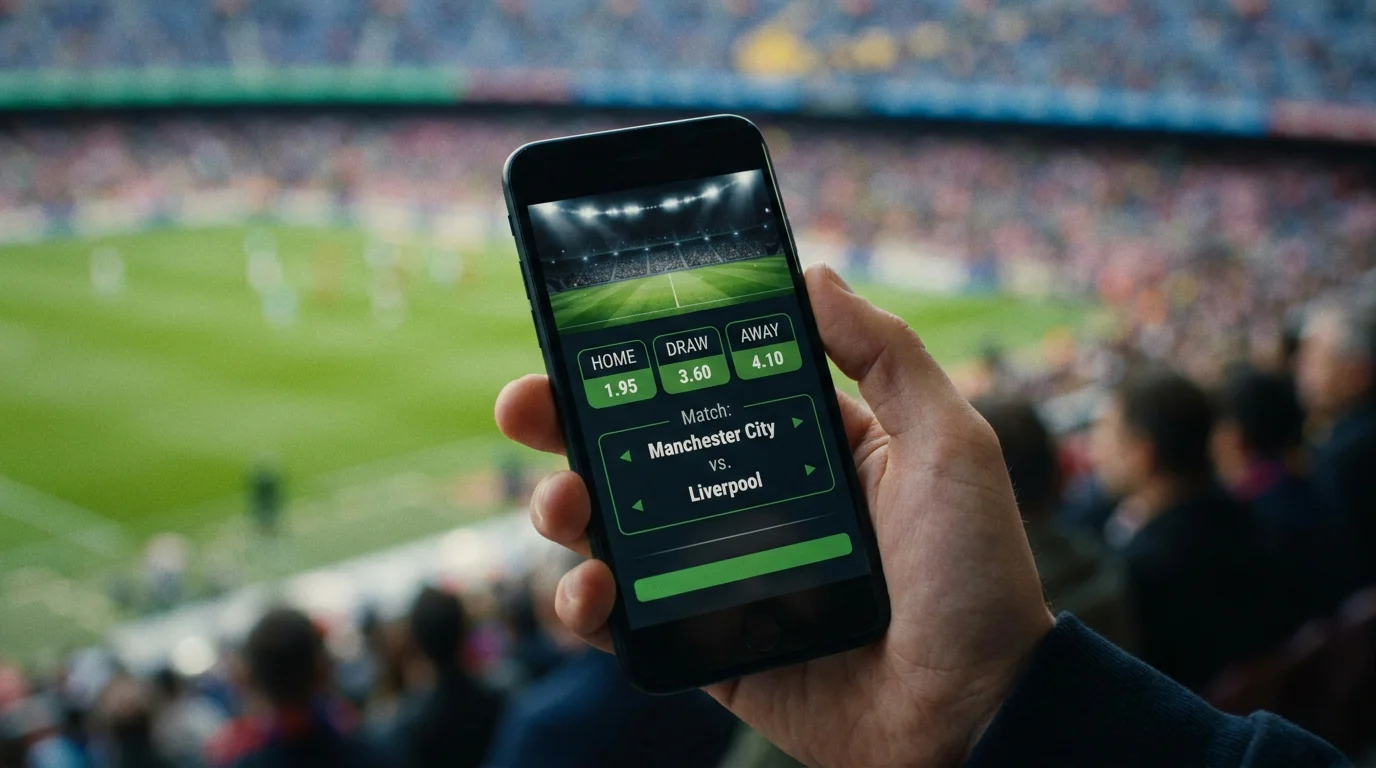
Once you are comfortable reading odds and tracking results, expand into over/under goals. The 2.5 goals line is the most common: over means three or more goals, under means two or fewer. This market teaches you to think about the match as a whole rather than picking a winner, which is a useful mental shift.
Both teams to score — BTTS — is the next natural step. It is a yes/no bet on whether both sides find the net. Simple concept, but it introduces you to defensive analysis: checking clean sheet records, goalkeeper form, and how teams perform against different styles of opposition.
Leave accumulators, bet builders, correct score, and player props until you have at least three months of tracked results on singles. Those products are designed to be exciting, and excitement is not your friend when you are learning. For a fuller explanation of how to read the numbers on these markets, the football betting odds explained guide walks through every format step by step.

Setting Deposit Limits and Session Alerts From Day One
This is the section most betting guides put at the bottom in small print. I am putting it here because it matters more than anything else in this article.
Every licensed UK operator is required to offer deposit limits, loss limits, and session time alerts. Set them before you place your first bet. Not after your first bad week. Not when you “feel like you need to”. Before you start. Treat them like a seatbelt: you put it on before driving, not after the first near-miss.
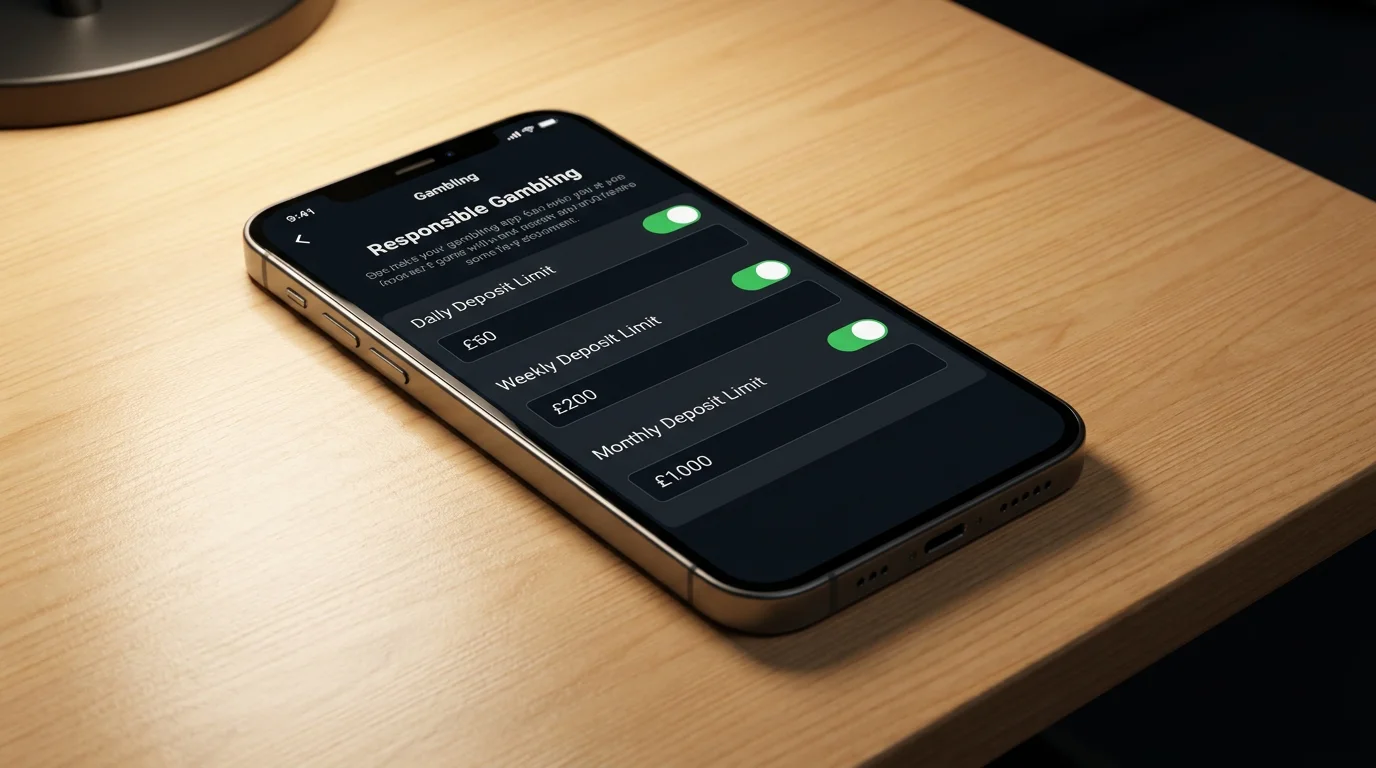
A sensible starting deposit limit depends on your financial situation, but a reasonable benchmark for a beginner is an amount you would comfortably spend on a night out and not think about again. For most people that is somewhere between 20 and 50 pounds per month. Set that as your monthly deposit limit. If you hit it by the second week, you wait until next month. No exceptions, no adjustments mid-month.
Session alerts are equally important. It is remarkably easy to lose track of time when you are cycling between matches on a Saturday afternoon or scrolling through in-play markets on a Tuesday evening. Set a 60-minute session alert. When it fires, put the phone down, do something else for at least 30 minutes, and then decide whether you actually want to continue. In my experience, the answer is usually no — the urge passes quickly once the loop is broken.
The data on this is sobering. Around 2.7% of UK adults score as problem gamblers on the PGSI scale, and the highest-risk group is 18-24 year olds, where 5.3% meet the threshold. Football is the single biggest category of sports betting. Setting limits from day one is not a sign of weakness — it is the most analytically sound decision a beginner can make.

Five Beginner Mistakes and How to Sidestep Them
Every experienced bettor has made these. The difference between someone who learns and someone who keeps repeating them comes down to awareness and honesty.
Chasing losses is the first and most dangerous. You lose 20 pounds on a Saturday, feel frustrated, and place a hasty 30-pound bet on the evening match to “win it back”. This is how small losses become significant ones. The antidote is your deposit limit: if it is set, you physically cannot chase beyond it.
Betting on your own team is the second. Emotional attachment distorts probability assessment. I support a mid-table Premier League side and I have not placed a bet on their matches in over five years. My analysis of their fixtures is hopelessly biased and I know it. Bet with your head, not your shirt.
Stacking accumulators for the sake of bigger odds is the third. A ten-fold accumulator at 500/1 sounds thrilling. The probability of it landing is around 0.1%, and the bookmaker’s margin on that product is north of 40%. You are buying a lottery ticket with worse odds than the actual lottery. Start with singles.
Ignoring the bookmaker’s margin is the fourth. Every price you see includes a built-in profit margin for the operator. If you do not understand how that margin works, you are playing a game where the rules are tilted against you and you do not even know by how much.
Not tracking bets is the fifth. Memory is unreliable and selectively flattering. Write down every bet: date, match, market, odds, stake, result. After 50 bets, review. After 100, review again. The numbers will tell you things your memory will not — including whether you should keep going at all.

What is the minimum age to bet on football in the UK?
You must be 18 or older to place any form of bet in the UK, whether online or in a betting shop. Operators are required to verify your age before allowing you to deposit or bet, and the Gambling Commission enforces this rigorously.
How much money should a beginner start with for football betting?
Start with an amount you would be comfortable losing entirely — think of it as entertainment spending, not investment capital. For most beginners, a monthly deposit limit of 20 to 50 pounds is a sensible starting point. Set this limit before placing your first bet and do not adjust it upward during the month.
Do I need to verify my identity to place a football bet?
Yes. All UK-licensed operators must verify your identity and age before you can deposit funds or place bets. This typically involves uploading a photo ID such as a passport or driving licence and proof of address. Most verifications complete automatically in minutes through electronic checks.
