
 Available in US
Content
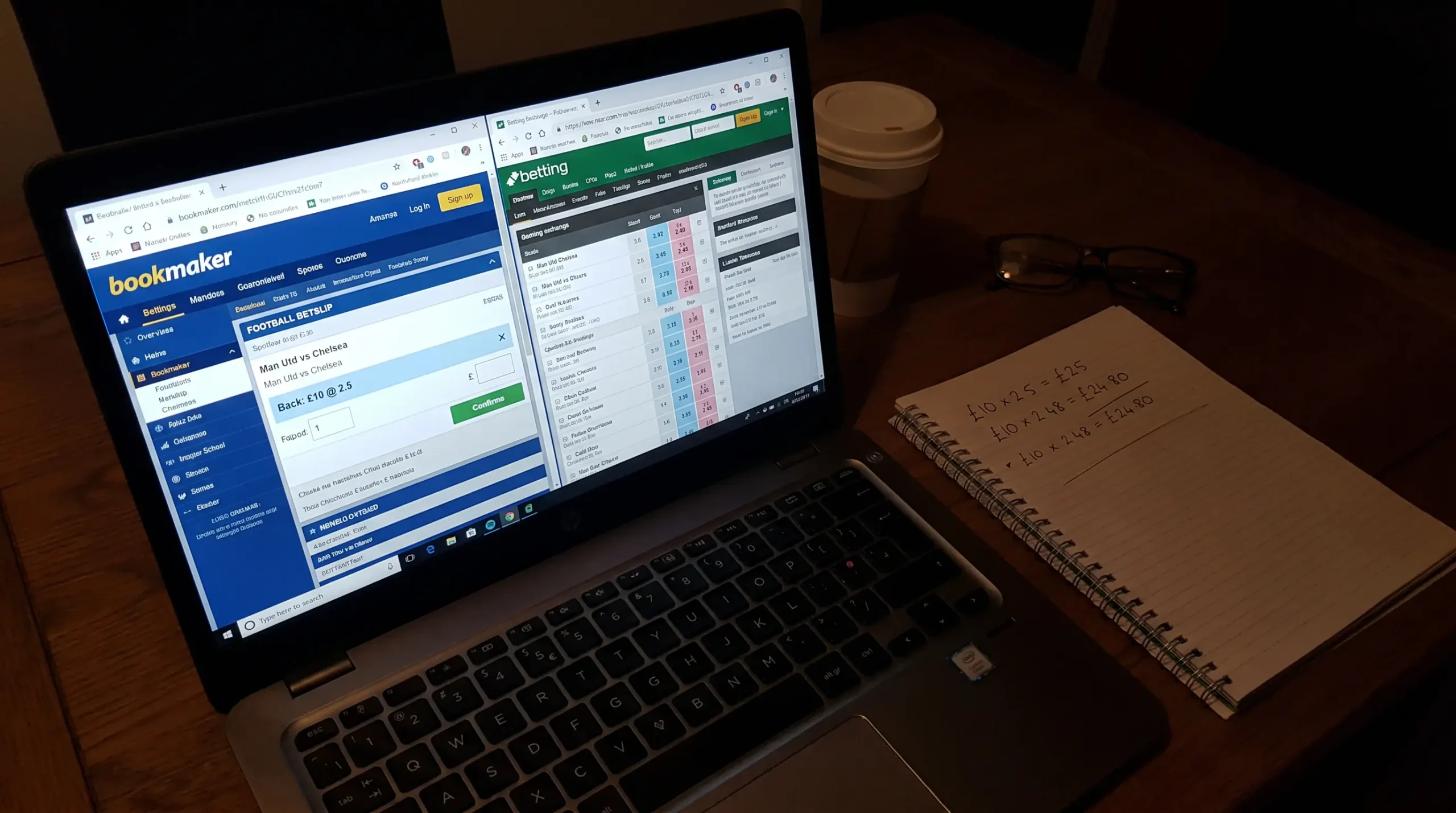
Matched Betting Turns Bookmaker Promotions into a Low-Risk Exercise
I first heard about matched betting from a university friend who casually mentioned he was making a few hundred pounds a month “from free bets”. My immediate reaction was scepticism — it sounded like one of those schemes that works in theory and falls apart in practice. Then he showed me his spreadsheet. Six months of records, every transaction documented, a steady stream of modest but consistent returns extracted from bookmaker sign-up offers. No gambling involved in the traditional sense. Just maths.
Matched betting works by using the free bets and welcome offers that bookmakers hand out to new customers and exploiting them through opposing bets on a betting exchange. You back an outcome with the bookmaker and lay the same outcome on the exchange, creating a position where you profit regardless of the result. The number of active accounts across UK remote betting operators sits at around 24.4 million, with 34 million new registrations in the 2024-25 financial year alone — each one a potential source of promotional offers.

Back, Lay, and the Qualifying Bet
The mechanics are straightforward once you understand the two-sided structure. A “back” bet is what you place at a bookmaker — you are betting that an outcome will happen. A “lay” bet is placed on an exchange — you are betting that the same outcome will not happen. When you combine the two on the same event at similar odds, the net outcome is close to zero. You have neutralised the risk.
The process starts with a qualifying bet. Most welcome offers require you to place a bet at minimum odds before the free bet is released. You place this qualifying bet at the bookmaker and simultaneously lay it on the exchange. The qualifying bet typically results in a small loss — the difference between the back and lay odds plus the exchange commission. Think of it as the entry fee. On a 10-pound qualifying bet at odds of 2.00, with a lay at 2.02 on the exchange charging 2% commission, the qualifying loss is usually between 30 and 60 pence.
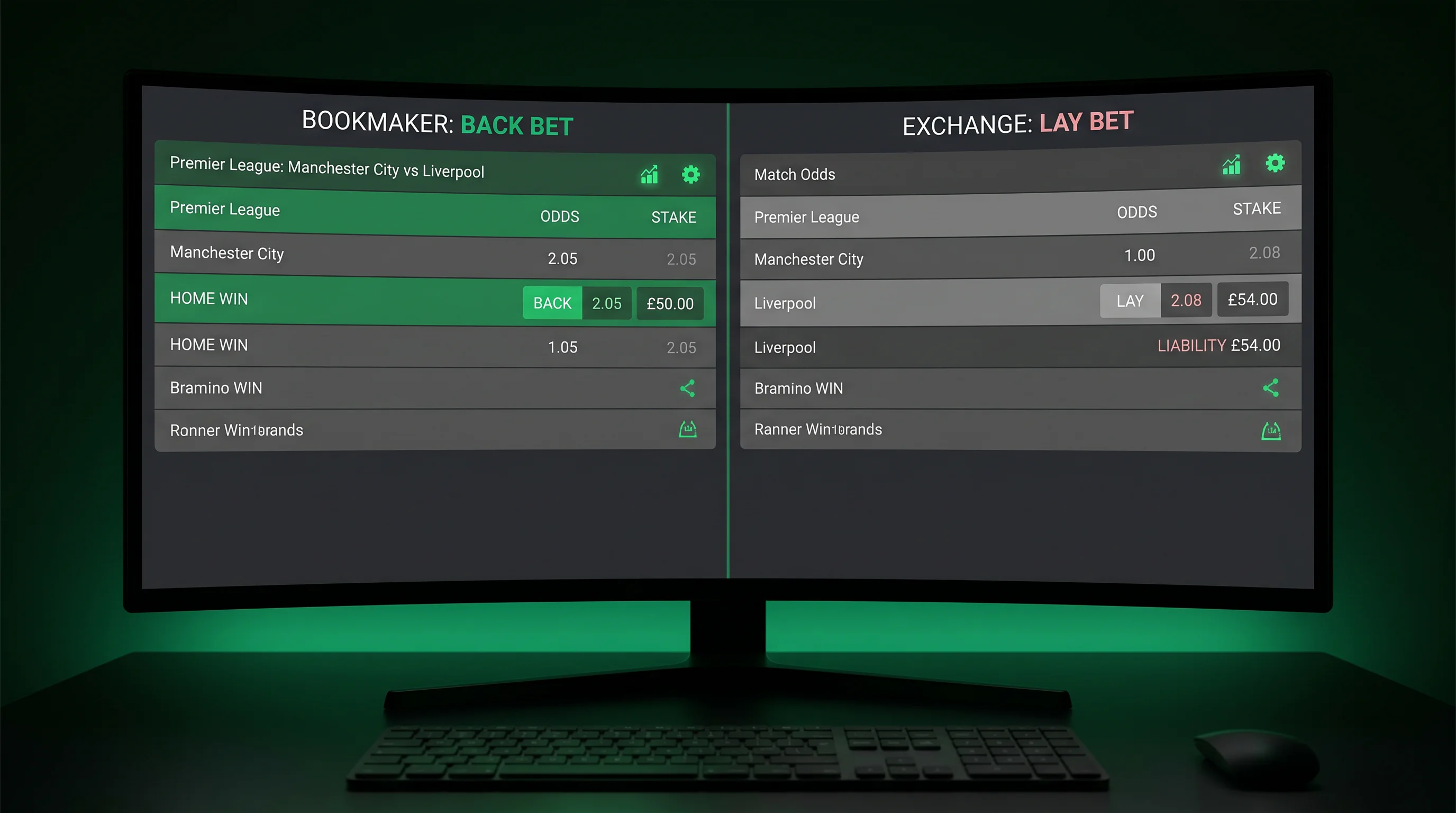
Once the free bet is credited, you repeat the process but with an important difference: the stake on a free bet is not returned if you win. This means you want to use the free bet on a selection at higher odds to maximise the retained profit. Back at 5.00 with the free bet, lay at 5.10 on the exchange, and the maths produces a guaranteed return of roughly 80% of the free bet’s face value after exchange commission. A 20-pound free bet yields roughly 16 pounds. Repeat across multiple bookmakers and the returns accumulate.

Which Football Offers Work for Matched Betting
Not all promotions are equally useful. The best offers for matched betting share a few characteristics: low wagering requirements, reasonable minimum odds, and no restrictions on which markets you can use.
Sign-up offers are the bread and butter. “Bet 10 get 30 in free bets” or “Bet 20 get 20” are standard across UK operators. These offers are designed to attract new customers and are almost always profitable when matched correctly. Football is the ideal sport for qualifying bets because the 1X2 market has tight spreads between bookmaker and exchange odds, which minimises your qualifying loss.
Reload offers and loyalty promotions are the ongoing income. “Bet 10 on the Premier League this weekend and get a 5-pound free bet” appears regularly across major operators, especially around high-profile fixtures. These offers are smaller individually but they repeat weekly, and their cumulative value over a season is significant. I tracked a full Premier League season of reload offers across five operators and extracted just over 800 pounds — not life-changing, but a meaningful return for an hour or two of activity per week.

Acca insurance offers — “get your stake back as a free bet if one leg of your accumulator loses” — require more careful handling. You need to construct the accumulator with all legs matched on the exchange, which is more complex and produces higher qualifying losses. The profit per offer is larger but so is the execution risk. I would not recommend these until you are comfortable with the basic back-lay process.
Account Restrictions and the Long-Term Reality
Here is the part that matched betting guides often gloss over: bookmakers are not stupid, and they do not enjoy giving away money. Every major UK operator has a trading team that monitors accounts for patterns consistent with matched betting, and they will restrict your account once they identify you.
Restriction — colloquially called “gubbing” — means your maximum stake is reduced to trivially small amounts, or you are excluded from promotional offers entirely. This does not happen after one or two free bets. It typically takes a few months of consistent promotional extraction. But it does happen, and it happens to virtually everyone who matched bets seriously.
Neal Menashe, CEO of Super Group, has spoken about the importance of reasonable taxation paired with enforcement against offshore operators. The same commercial logic applies to promotions: operators offer them to acquire customers who will become long-term recreational bettors, not to fund indefinite extraction by matched bettors. When they identify the latter, they cut off the supply.

The long-term reality is that matched betting is a finite activity. You cycle through the sign-up offers, extract the value, get restricted, and move on. Reload offers last longer but eventually dry up as accounts are flagged. I view matched betting as a useful starting capital exercise rather than a sustainable income stream. It teaches discipline, record-keeping, and the mechanics of odds — all of which are transferable to choosing betting sites and betting more broadly.
Is Matched Betting Legal in the UK?
Matched betting is entirely legal. You are placing bets within the terms offered by licensed operators and using a legal betting exchange to offset your risk. There is no fraud, no exploitation of a loophole, and no violation of gambling law. The Gambling Commission licenses both the bookmakers and the exchanges, and the activity falls squarely within the rules of both. The UK has over 8,148 licensed gambling premises including 5,669 betting shops, and the online market is governed by the same regulatory framework.

What matched betting is not is risk-free in the absolute sense. Execution errors — laying the wrong selection, miscalculating the lay stake, forgetting to place the lay before the event starts — can and do result in losses. I have made every one of those mistakes at least once. The process is low-risk when executed correctly, but “correctly” requires attention to detail and a systematic approach. If you are careless, you will lose money.
Bookmakers can also restrict or close your account at their discretion. This is not illegal — the terms and conditions of every operator give them that right. It is frustrating, and it feels unfair, but it is the commercial reality of the product.
Is matched betting on football risk-free?
It is low-risk when executed correctly, but not completely risk-free. The maths guarantees a profit on each offer when the back and lay bets are placed accurately. However, execution errors — wrong selections, miscalculated stakes, or failing to place the lay bet — can result in real losses. Human error is the primary risk, not the method itself.
Will bookmakers close my account for matched betting?
Bookmakers will typically restrict your account rather than close it outright. Restrictions mean reduced maximum stakes or exclusion from promotional offers. This happens to virtually all serious matched bettors over time, usually within a few months. It is legal for operators to do this under their terms and conditions.
