
 Available in US
Content

If You Are Not Tracking Your Football Bets, You Are Guessing Whether You Are Profitable
For my first eighteen months of betting, I had no records. I deposited money, placed bets, sometimes withdrew, and had a vague sense that I was “roughly breaking even”. When I finally sat down and reconstructed my history from bank statements and operator transaction logs, the reality was sobering: I was down 14% on total stakes. Not catastrophic, but not the breakeven I had imagined. The human memory is spectacularly biased towards remembering winners and forgetting losers, and without records, that bias becomes your accounting system.
Football generates approximately 1.3 billion pounds in remote gross gambling yield in the UK each year. That figure represents the aggregate losses of bettors across the market. The UK online gambling market is valued at around 9.0 billion dollars and is projected to grow to 13.2 billion by 2034. Within that market, the bettors who consistently profit are the ones who know their numbers — not approximately, not from memory, but from rigorous, bet-by-bet records.
What to Record: The Essential Fields
Every bet in my spreadsheet contains the following: date, match, market, selection, odds at placement, stake, result, and profit or loss. These are non-negotiable. Without any one of them, meaningful analysis becomes impossible.
Beyond the essentials, I record three additional fields that have proven invaluable for diagnosing my performance. The first is the closing odds — the price available at kick-off, which I copy from an odds comparison site. The second is my pre-bet probability estimate — the likelihood I assigned to the selection before checking the bookmaker’s price. The third is a one-line rationale — why I placed the bet, in ten words or fewer. “xG divergence from form, value at 3.20” tells me enough to reconstruct the thinking months later.
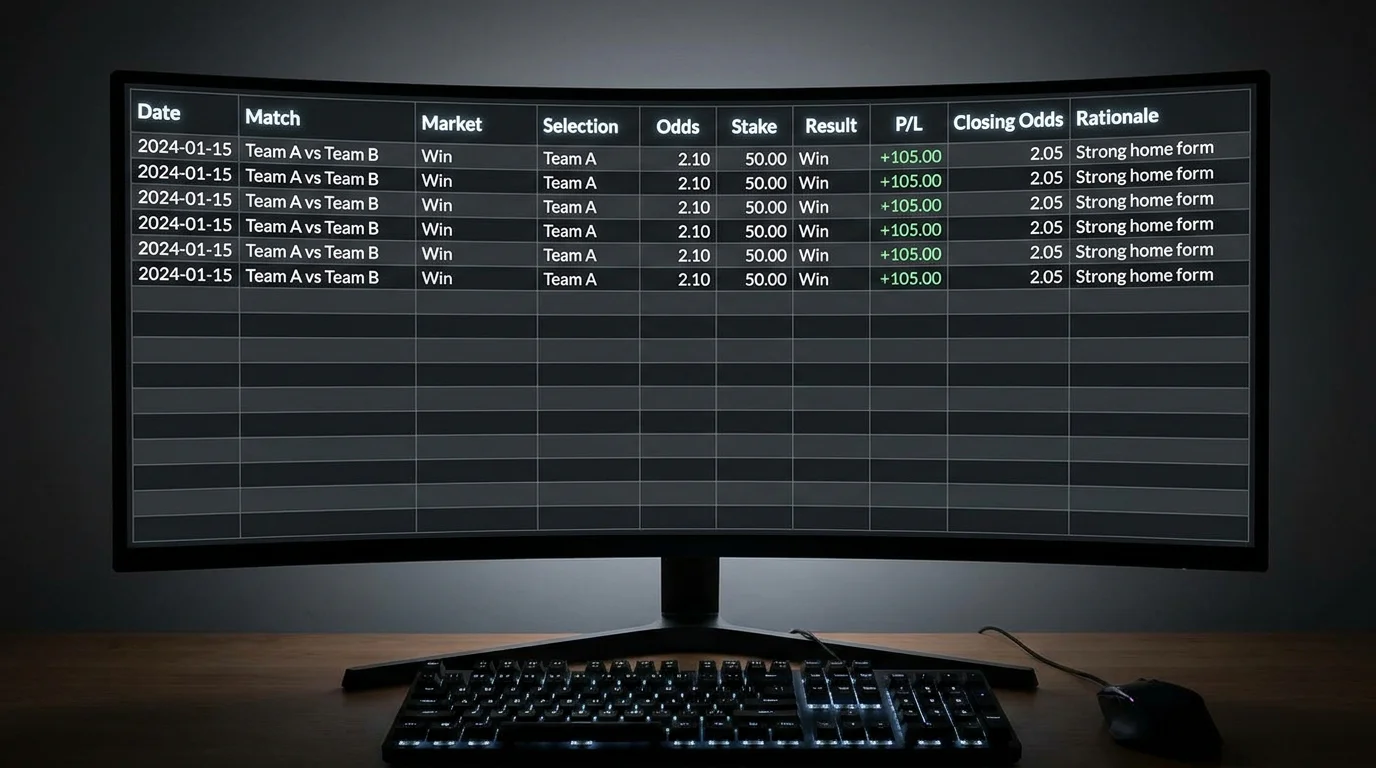
The rationale field is the one that surprises people. It seems redundant when you place the bet — of course you know why you backed the home win. Three months later, you will not remember. And when you review a losing streak, knowing whether the losses came from “xG divergence” bets or “gut feeling after watching highlights” bets tells you whether your model is broken or your discipline is.
Calculating ROI and Closing Line Value
ROI — return on investment — is the most basic measure of betting performance. Total profit or loss divided by total stakes, expressed as a percentage. An ROI of +3% means you have returned 3 pence in profit for every pound staked. An ROI of -5% means you have lost 5 pence per pound. Simple, unambiguous, and the first number I check at the end of every month.
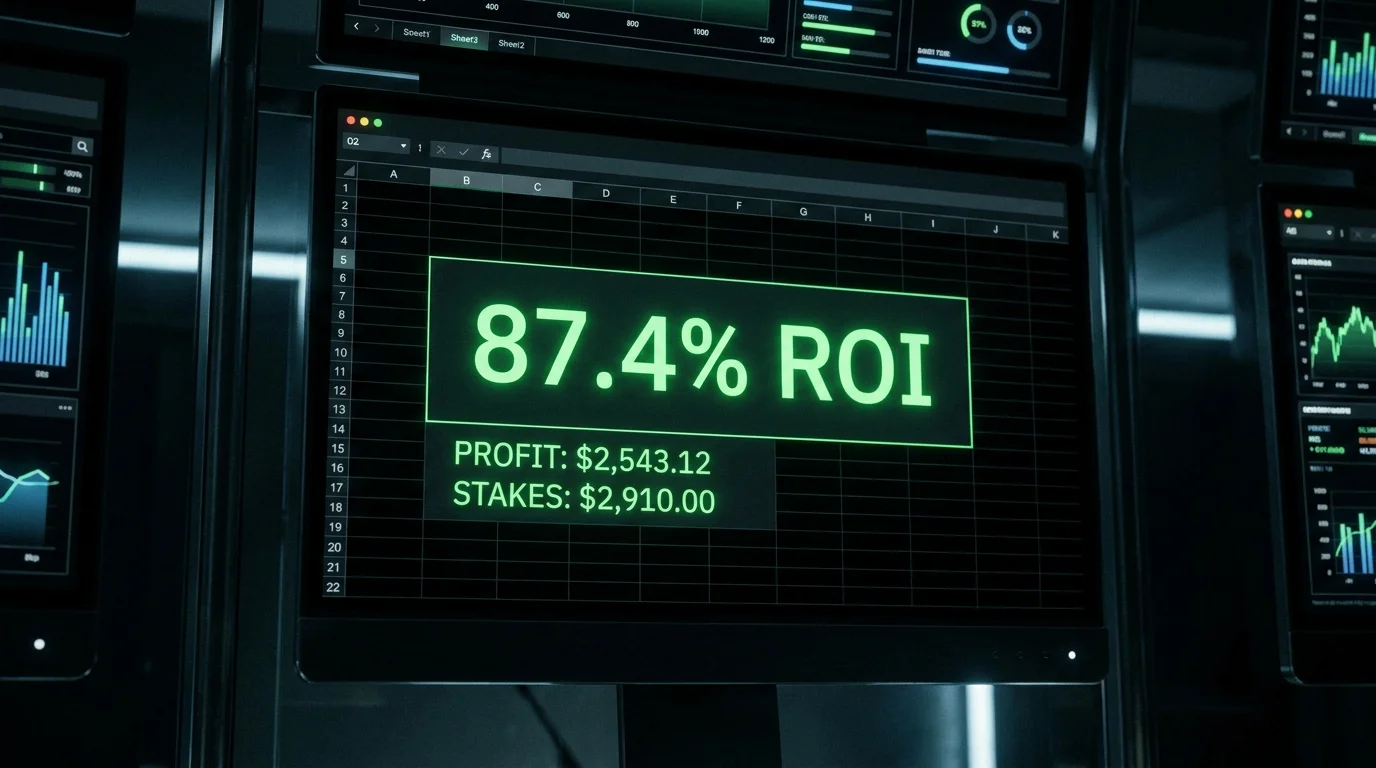
ROI tells you where you are but not whether you will stay there. A positive ROI over 100 bets could be luck. A positive ROI over 2,000 bets is much more likely to reflect genuine edge. The statistical significance of your ROI depends on the number of bets, the average odds, and the variance in your results. As a rough guide, I do not draw firm conclusions from my ROI until I have at least 500 bets in a specific market or strategy.
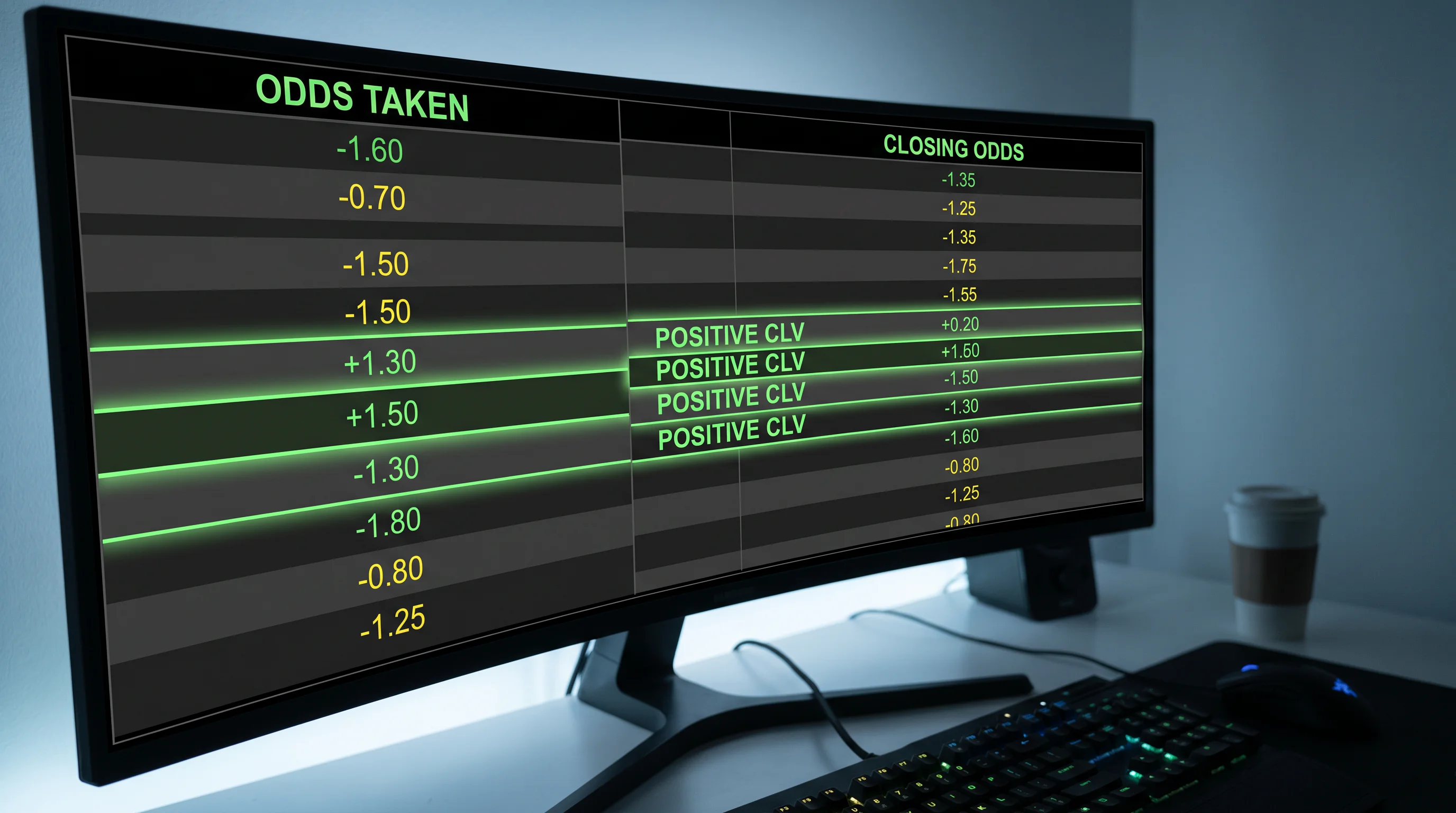
Closing line value — CLV — is the more sophisticated metric and arguably the better predictor of long-term profitability. CLV measures whether the odds you took were better than the closing odds (the final price available at kick-off). If you backed a team at 2.50 on Wednesday and the closing odds on Saturday were 2.30, you achieved positive CLV. You got a better price than the market’s final assessment.
Consistently beating the closing line is the strongest signal that your selections have genuine edge. The closing line is the most efficient price the market produces — it incorporates the maximum amount of information, including sharp money and late team news. If your bets consistently close at shorter odds than you took, you are identifying value before the market does. If your bets consistently close at longer odds, the market is moving against you, which suggests your analysis is lagging rather than leading.
I track CLV for every bet and review it monthly alongside ROI. There have been months where my ROI was negative but my CLV was positive — meaning I was placing good bets that happened to lose through variance. And there have been months where my ROI was positive but my CLV was negative — meaning I was getting lucky with poor selections. The CLV metric keeps me honest.
Spreadsheets, Apps, and Automation
A basic spreadsheet is all you need. I use a simple setup: one row per bet, columns for the fields described above, and a summary tab that calculates ROI, CLV, strike rate, and profit by market type. The whole thing takes ten minutes to set up and 30 seconds to update per bet.
Dedicated bet tracking apps exist and some are well-designed, but I prefer a spreadsheet for two reasons. First, I control the data and the calculations — I can add custom fields, build pivot tables, and run analyses that no pre-built app anticipates. Second, the act of manually entering each bet forces a moment of reflection. Typing “gut feeling” in the rationale column three bets in a row is a self-correcting mechanism.

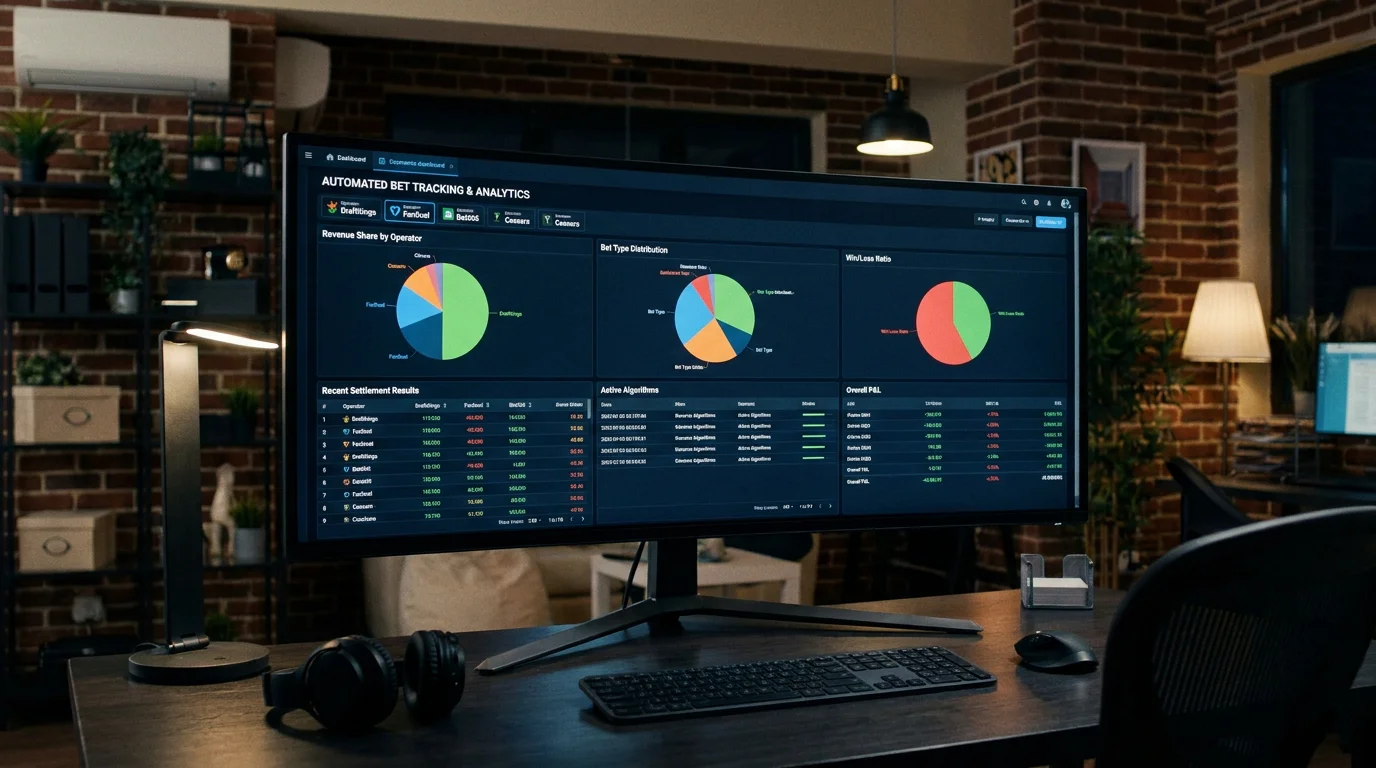
If your volume is high — more than 20 bets per week — manual entry becomes impractical. At that point, automation tools that pull settled bets from operator APIs or emails can save significant time. But for most recreational bettors placing 5-15 bets per week, the manual approach is not just adequate — it is superior, because the friction of data entry reinforces the discipline of selective betting. For a framework on setting the unit sizes and staking plans that your records should be measuring, the bankroll calculator guide covers the arithmetic of structuring your betting bank.
What is closing line value and why does it matter?
Closing line value measures whether the odds you took were better than the final odds available at kick-off. Consistently getting better odds than the closing line is the strongest predictor of long-term profitability in football betting. It indicates that your analysis identifies value before the market reaches its most efficient price. Even during losing streaks, positive closing line value suggests your process is sound and results will improve over time.
How many football bets do I need to track before results are statistically meaningful?
As a rough guide, 500 bets in a specific market or strategy provides a reasonable sample for drawing preliminary conclusions about ROI. Fewer than 200 bets are highly susceptible to variance and should not be treated as reliable indicators of edge. The higher your average odds, the more bets you need — a strike rate of 20% at average odds of 5.00 requires a larger sample to confirm profitability than a strike rate of 55% at average odds of 1.80.
